Showing posts with label World News. Show all posts

Friday, May 1, 2009

Cooler heads might have prevailed

In 1945, President Truman appointed Supreme Court Justice Robert H. Jackson as the chief prosecutor for the planned tribunals to try accused Nazi war criminals:
The privilege of opening the first trial in history for crimes against the peace of the world imposes a grave responsibility. The wrongs which we seek to condemn and punish have been so calculated, so malignant, and so devastating, that civilization cannot tolerate their being ignored, because it cannot survive their being repeated. That four great nations, flushed with victory and stung with injury stay the hand of vengeance and voluntarily submit their captive enemies to the judgment of the law is one of the most significant tributes that Power has ever paid to Reason.

This Tribunal, while it is novel and experimental, is not the product of abstract speculations nor is it created to vindicate legalistic theories. This inquest represents the practical effort of four of the most mighty of nations, with the support of 17 more, to utilize international law to meet the greatest menace of our times-aggressive war. The common sense of mankind demands that law shall not stop with the punishment of petty crimes by little people. It must also reach men who possess themselves of great power and make deliberate and concerted use of it to set in motion evils which. leave no home in the world untouched. It is a cause of that magnitude that the United Nations will lay before Your Honors.

In the prisoners' dock sit twenty-odd broken men. Reproached by the humiliation of those they have led almost as bitterly as by the desolation of those they have attacked, their personal capacity for evil is forever past. It is hard now to perceive in these men as captives the power by which as Nazi leaders they once dominated much of the world and terrified most of it. Merely as individuals their fate is of little consequence to the world.

What makes this inquest significant is that these prisoners represent sinister influences that will lurk in the world long after their bodies have returned to dust. We will show them to be living symbols of racial hatreds, of terrorism and violence, and of the arrogance and cruelty of power. They are symbols of fierce nationalisms and of militarism, of intrigue and war-making which have embroiled Europe generation after generation, crushing its manhood, destroying its homes, and impoverishing its life. They have so identified themselves with the philosophies they conceived and with the forces they directed that any tenderness to them is a victory and an encouragement to all the evils which are attached to their names. Civilization can afford no compromise with the social forces which would gain renewed strength if we deal ambiguously or indecisively with the men in whom those forces now precariously survive.

***

No charity can disguise the fact that the forces which these defendants represent, the forces that would advantage and delight in their acquittal, are the darkest and most sinister forces in society-dictatorship and oppression, malevolence and passion, militarism and lawlessness. By their fruits we best know them. Their acts have bathed the world in blood and set civilization back a century. They have subjected their European neighbors to every outrage and torture, every spoliation and deprivation that insolence, cruelty, and greed could inflict. They have brought the German people to the lowest pitch of wretchedness, from which they can entertain no hope of early deliverance. They have stirred hatreds and incited domestic violence on every continent. These are the things that stand in the dock shoulder to shoulder with these prisoners.

The real complaining party at your bar is Civilization. In all our countries it is still a struggling and imperfect thing. It does not plead that the United States, or any other country, has been blameless of the conditions which made the German people easy victims to the blandishments and intimidations of the Nazi conspirators.

But it points to the dreadful sequence of aggressions and crimes I have recited, it points to the weariness of flesh, the exhaustion of resources, and the destruction of all that was beautiful or useful in so much of the world, and to greater potentialities for destruction in the days to come. It is not necessary among the ruins of this ancient and beautiful city with untold members of its civilian inhabitants still buried in its rubble, to argue the proposition that to start or wage an aggressive war has the moral qualities of the worst of crimes. The refuge of the defendants can be only their hope that international law will lag so far behind the moral sense of mankind that conduct which is crime in the moral sense must be regarded as innocent in law.

Civilization asks whether law is so laggard as to be utterly helpless to deal with crimes of this magnitude by criminals of this order of importance. It does not expect that you can make war impossible. It does expect that your juridical action will put the forces of international law, its precepts, its prohibitions and, most of all, its sanctions, on the side of peace, so that men and women of good will, in all countries, may have "leave to live by no man's leave, underneath the law."
Robert H. Jackson, Chief of Counsel for the United States, Nuremberg, Germany, November 21, 1945

To compare al-Qaeda directly to the Nazis is of course to give al-Qaeda far too much credit, but there is an obvious analogy to be made. Of all the reasons that the torture and other depredations of the Bush years should be investigated and prosecuted, perhaps one of the greatest and least-mentioned is this: in addition to losing our moral standing in the world, consider what the world has lost in terms of opportunities to bring organizations like al-Qaeda to light, to expose them for the cowards and liars that they are, and to begin the process of redressing the conditions so as to make such acts as the 9/11 attacks inconceivable to all humanity. I am not naive enough to think that war and terror can be stamped out solely through honesty, but the fundamental laws of human dignity and decency did not cease to function in September 2001. It is precisely the calm and measured tone of Justice Jackson that has been sorely missing for the past 7+ years. What if the knowledge gleaned from Khalid Sheikh Mohammed's (pre-torture) interrogation had been made known to the world in 2003 or 2004? What more could have been accomplished in stemming the tide of hatred and violence fomented by the bin Ladens of the world if we had kept our sights on them the whole time? We will never know, and that is a loss that should not go unredressed.

Saturday, April 11, 2009

Question re: pirate standoff

OK, I understand the importance of safeguarding the captain held hostage aboard the pirates' lifeboat, as well as the 200-odd other hostages held by Somali pirates elsewhere. This isn't something where we (and by that I mean the U.S. military) should charge in guns blazing--those times are quite rare, if they exist at all. Keeping the hostages safe is the most important factor, although I think "never negotiating with terrorists" is strongly vying for the top spot among priorities. And yes, just because your motives are pecuniary and not ideological doesn't mean you are not a terrorist--just my $0.02.

Here's what I don't get, though: the U.S.S. Bainbridge, an Arleigh Burke-class guided missile destroyer, is "keeping its distance, in part to stay out of the pirates' range of fire."

I am no expert in naval strategy and tactics, nor do I have any proficiency in hostage negotiations (particularly where there are potentially multiple hostages in play in multiple locations). But really, unless they are carrying suitcase nukes, what could the pirates possibly have on board the lifeboat that could seriously threaten the Bainbridge? The only shots fired so far appear to have been fired by the pirates during an escape attempt by the hostage. Does the Bainbridge have any Marine snipers on board or anything? Maybe I've just seen too many movies, but when the most powerful Navy the world has ever known is held at bay by a lifeboat, something just seems a bit wrong.

Discuss.

Friday, September 5, 2008

It's good to be the king

I can't say I agree with or approve of the practice going on here, but I am astonished to see this headline in 2008:

Bare-breasted virgins compete for Swaziland king

By Phakamisa Ndzamela

LUDZIDZINI ROYAL VILLAGE, Swaziland (Reuters) - Tens of thousands of bare-breasted virgins competed for Swaziland King Mswati III's eye on Monday in a traditional Reed Dance.

Walking through the dense crowds in a leopard skin loin cloth, Sub-Saharan Africa's last absolute monarch was expected to choose his 14th wife.

Critics say Mswati, who has courted controversy for his lavish lifestyle while two thirds of his subjects live in poverty, sets a bad example by encouraging polygamy and teenage sex in a country where about 40 percent of adults live with HIV.

Some of the women did not seem to mind, hoping to escape from the southern African nation's hardships for the easy life.

"I came here to dance. I wish the king would have chosen me because it's nice at the king's place. The wives live a nice life," said Tenene Dlamini, 16, in a traditional brown skirt.

"Everything is done for them. They don't work. They earn."
Wow. Just wow. Read more about this guy here.

Sunday, July 13, 2008

Politically-correct Follies, UK-style

The British government has launched an effort to stamp out racism and prejudice at the earliest possible age, including infancy. One heretofore-unnoticed sign of nascent racism? Disliking spicy foreign food:
The National Children's Bureau, which receives £12 million a year, mainly from Government funded organisations, has issued guidance to play leaders and nursery teachers advising them to be alert for racist incidents among youngsters in their care.

This could include a child of as young as three who says "yuk" in response to being served unfamiliar foreign food.

The guidance by the NCB is designed to draw attention to potentially-racist attitudes in youngsters from a young age.

It alerts playgroup leaders that even babies can not be ignored in the drive to root out prejudice as they can "recognise different people in their lives".

The 366-page guide for staff in charge of pre-school children, called Young Children and Racial Justice, warns: "Racist incidents among children in early years settings tend to be around name-calling, casual thoughtless comments and peer group relationships."

It advises nursery teachers to be on the alert for childish abuse such as: "blackie", "Pakis", "those people" or "they smell".

The guide goes on to warn that children might also "react negatively to a culinary tradition other than their own by saying 'yuk'".

Staff are told: "No racist incident should be ignored. When there is a clear racist incident, it is necessary to be specific in condemning the action."

Warning that failing to pick children up on their racist attitudes could instil prejudice, the NCB adds that if children "reveal negative attitudes, the lack of censure may indicate to the child that there is nothing unacceptable about such attitudes".

Nurseries are encouraged to report as many incidents as possible to their local council. The guide added: "Some people think that if a large number of racist incidents are reported, this will reflect badly on the institution. In fact, the opposite is the case."
I have no idea what sort of power these "local councils" have in the UK, but it certainly sounds ominous. I can hardly fault a program to discourage youngsters from using actual racist epithets, but I have to wonder how it could have taken 366 pages to address this issue. Allow me to list my first few reactions:

1. WTF????
2. If school teachers discourage something, don't they run the risk of kids thinking it's cool? Racism may become the new Sex Pistols for young Britons.
3. Compared to standard British fare, nearly all foreign food is spicy, and is likely to be a shock to the palate of anyone raised on fish & chips. Don't fault little Nigel for reeling at a flavor explosion.
4. A lot of foreign food is just plain gross if you didn't grow up with it--e.g. kim chee (fermented cabbage, Korea) and hákarl (rotten shark meat, Iceland).
5. Hopefully they will include "limey" in the list of slurs to be discouraged--mostly just because we need something to ruffle the feathers of ordinary pasty Brits. Oh, and because sensitivity to racism is a mutli-directional street.

At the very least, I'm sure we can all agree that the British government seems to have too much time on its hands.

Monday, June 30, 2008

Happy Tunguska Day!!!

Speaking of destroying the world, today is the 100th anniversary of the meteor/comet/Cylon basestar impact over Tunguska, Siberia.


Bad Astronomy has all the gory details:
100 years ago today, a small chunk of rock or possibly ice was lazily making its way across the inner solar system when a large, blue-green planet got in its way. Traveling roughly westward, it entered the Earth’s atmosphere moving at tens of thousands kilometers per hour. Compressed and battered by tremendous forces, the object got about 5 - 10 kilometers from the ground before it succumbed, exploding like a gigantic multi-megaton bomb.

The air blast flattened trees for hundreds of square kilometers. The ground shook, witnesses felt the hellish heat from kilometers away, and the shock wave circled the world. It happened over the remote Podkammenaya Tungus river, a swampy region in Russia; had it happened over Moscow a million people might have died within minutes.

Now known as the Tunguska Event, it stands today as a shocking reminder that we live in a cosmic shooting gallery, and the Earth sits in the crosshairs of many objects.
I'm not too worried about impacts from outer space objects. Hopefully we'd see it coming, and if there's anything we could do about it, we would (one hopes). My concern is what would happen if something like Tunguska happened today and it wasn't terribly destructive, because it would probably be followed shortly by someone's nuclear arsenal, and then there would be terrible destruction. Overreaction, I'm sayin'. Imagine, if you will, that today was the 50th anniversary of Tunguska, not the 100th. That would mean that, on June 30, 1958, a massive fireball of uncertain origin erupted over Siberia. We know now that the Soviets didn't have as much atomic annihilation capacity as was once feared (although it was and is pretty f--in' scary), but they also had a highly flawed decision-making structure. It would at least make for some interesting alternate history.

You never know where you might find useful info

A combination of being on vacation (at home), being bored, and enjoying learning led to me to random Wikipedia pages on European history. That, in turn, led me to an interesting series of maps of Europe (yes, I'm a nerd; and no, you cannot give me a wedgie). What makes this notable is that, in addition to obviously-educationally-relevant maps showing language and religion and such, they also present these nuggets of wisdom: Legal status of cannabis in Europe, and Ages of sexual consent in Europe. I tried hotlinking the maps, but to no avail (the page won't even let you right-click). More to the point, alongside maps showing population density and the like, you have a map showing where it's legal to get baked and/or find a woman to go with your whiskey.

I think I saw all of this on a t-shirt once.

Point is, if anyone ever tells you they're going to Europe based on information they got from a map on Eupedia, you might seriously consider punching that person in the groin very, very hard.

Wednesday, April 23, 2008

Life imitates art: The Onion scoops the AP, sort of

New in world news: Al Qaeda has criticized Iran for spreading various 9/11 conspiracy theories involving Israel (h/t VC):
Osama bin Laden's chief deputy in an audiotape Tuesday accused Shiite Iran of trying to discredit the Sunni al-Qaida terror network by spreading the conspiracy theory that Israel was behind the Sept. 11 attacks.
In this instance, the al Qaeda guy is at least partly right--as anyone with half a brain knows, 9/11 was an inside job; however, to paraphrase Gary Larson, people with whole brains tend to disagree, and are generally more articulate in expressing their views.

An astute commenter to the Volokh post that set me off on this little tirade made the all-important connection: that it was in fact "America's Finest News Source" that first broke this story:


9/11 Conspiracy Theories 'Ridiculous,' Al Qaeda Says

To be fair, al Qaeda worked really hard to come up with something that diabolically horrendous. They even managed to outdo Hollywood in most ways; to my knowledge, only Stephen King ever came up with a scheme similar to 9/11 (cf The Running Man, spoiler alert!) and that didn't even make it into the movie. Let's not take this away from them, really. Besides, there's still whoop-ass to dish out to them.

Friday, March 14, 2008

Demystifying St. Paddy

Some much-needed demystification (demythification?) of the annual senseless beerfest that is St. Patrick's Day (not that I'm knocking mass consumption of beer) comes to us from Andy Crouch (h/t Shakesville):
So that time of year is upon us once again, the time when imbibing throngs pack into bars, throw on giant, foam hats, and clink mugs of green beer in celebration of, well, something. Perhaps a greater perversion than even the American fascination with and celebration of Cinco de Mayo, St. Patrick’s Day is an opportunity for wild, unabashed revelry among the masses and for big breweries to haul in the cash.

***

Now I don’t begrudge anyone a day or two a year to let loose but this particular holiday, along with Cinco de Mayo, has always felt pretty forced to me, especially in Boston. Quick, tell me three things you know about the man known as Naomh Pádraig. Admit it, the only thing you could come up with was the snake thing. And when you think of Cinco de Mayo, you think of the day that Mexicans won their freedom. You and millions upon millions of others would be wrong on both counts. But why let a little history, or legend, get in the way of a few pints, right?
Speaking as something of a faux-Irishman myself, I've always had a troubled relationship with St. Patrick's Day. It's not just most Americans' atrocious taste in beer...I think it's the rather rote manner in which we celebrate so many of our holidays. While I'm certainly looking forward to many of the planned events, the history of the day is left rather vague.

So I decided to do an extremely minimal amount of research (since I'm skipping work today anyway) (h/t Wikipedia):
Saint Patrick (Latin: Patricius, Irish: Naomh Pádraig) was a Christian missionary and is the patron saint of Ireland along with Brigid of Kildare and Columba. Patrick was born in Roman Britain. When he was about sixteen he was captured by Irish raiders and taken as a slave to Ireland, where he lived for six years before escaping and returning to his family. He entered the church, as his father and grandfather had before him, becoming a deacon and a bishop. He later returned to Ireland as a missionary, working in the north and west of the island, but little is known about the places where he actually worked and no link can be made with Patrick and any church. By the eighth century he had become the patron saint of Ireland.
Okay, that's all well and good, but what about all the cool stuff he's supposed to have done?
Pious legend credits Patrick with banishing snakes from the island, though post-glacial Ireland never actually had snakes; one suggestion is that snakes referred to the serpent symbolism of the Druids of that time and place, as shown for instance on coins minted in Gaul (see Carnutes), or that it could have referred to beliefs such as Pelagianism, symbolized as “serpents”.
Bit of a buzzkill, but legend usually has an element of metaphor to it. According to the Smithsonian, Ireland has never had snakes:
It's true, aside from zoos and pets, there are no snakes on the emerald isle. In fact, there never were any snakes in Ireland. This state of affairs probably has more to do with the vagaries of geography than any neat tricks performed by St. Patty.

***

[S]nakes are found in deserts, grasslands, forests, mountains, and even oceans virtually everywhere around the world. Everywhere except Ireland, New Zealand, Iceland, Greenland, and Antarctica, that is.

One thing these few snake-less parts of the world have in common is that they are surrounded by water. New Zealand, for instance, split off from Australia and Asia before snakes ever evolved. So far, no serpent has successfully migrated across the open ocean to a new terrestrial home. As the world's oceans have risen and fallen over the millennia, land bridges have come and gone between Ireland, other parts of Great Britain, and the European mainland, allowing animals and early humans to cross. However, any snake that may have slithered it's [sic] way to Ireland would have turned into a popsicle when the ice ages hit.
And so how did his day become such a big deal?
Irish colonists brought Saint Patrick's Day to what is now the United States of America. The first civic and public celebration of Saint Patrick's Day in the 13 colonies took place in Boston, Massachusetts in 1737. During this first celebration The Charitable Irish Society of Boston organized what was the first Saint Patrick's Day Parade in the colonies on 17 March 1737. The first celebration of Saint Patrick's Day in New York City was held at the Crown and Thistle Tavern in 1756, and New York's first Saint Patrick's Day Parade was held on 17 March 1762 by Irish soldiers in the British Army. In 1780, General George Washington, who commanded soldiers of Irish descent in the Continental Army, allowed his troops a holiday on 17 March. This event became known as The St. Patrick's Day Encampment of 1780. Today, Saint Patrick's Day is widely celebrated in America by Irish and non-Irish alike. Americans celebrate the holiday by wearing green clothing. Many people, regardless of ethnic background, wear green-coloured clothing and items. Traditionally, those who are caught not wearing green are pinched. Alcohol is the centre of many American celebrations.
I guess that's all we really need to know. Just grab a Smithwicks and chill.

Modern American miltary history, as told by food

Too strange to be missed--"Food Fight". I'm still trying to figure out what food represents Russia (without consulting the cheat sheet). (h/t Brad Plumer).


Obviously, the USA = hamburgers.

My favorite is the use of kimchee to represent Korea.

Thursday, October 25, 2007

The Swedes are coming for you...

As I was embarking on a trip through the local IKEA store yesterday, I happened upon a scene that made the very red of my oh-so-American blood boil...


A Swedish flag, flying at the same level as the Texas flag. AND the American flag.

As we all know from my comments on a nutjob in Reno who committed criminal mischief, it is illegal to fly another nation's flag even with the Stars and Stripes.

As we also all know from my comments on how the War on Terror has made us all incredibly stupid, IKEA was recently the setting for an alleged-attempted terror attack by drunken joggers.

Now my crack investigation skills have revealed the following chilling information:
I can only conclude the following: Sweden is conducting a covert campaign to conquer and colonize America. We must fight IKEA at every turn--could it be possible that, if you assemble the parts correctly, a trained Swedish operative disguised as a helpful IKEA employee could construct, say, a tank?

Beware, America, for the TYLÖSAND conquest may be soon at hand! Can I get a "Hell ja"?

Monday, September 24, 2007

Those neocons and their tiny peckers...

I have this theory about the hubbub surrounding Iranian president Ahmadinejad's visit to the Big Apple--I think the neocons who are chanting the loudest for war with Iran are pants-wettingly terrified of actually facing the man, mano a mano, and having to say directly, out loud, what they think, as well as face the fact that many Iranians had the gall to support us after 9/11 (which undercuts the neocon view of all Iranians as Evil Brown People). It's so much easier to keep him at arm's length and portray him as a cartoon villain, isn't it?

Friday, September 21, 2007

Et tu, Belgium?

I posted the other day about similarities between Iraq today and Yugoslavia 15 years ago, and how I hope (certainly naively) that Iraq will go the way of Czechoslovakia more than Yugoslavia. The other major split-state crisis in the world, of course, is Israel/Palestine, but now it turns out (h/t Volokh Conspiracy) that another potential separation may occur in Belgium, of all places.
“We are two different nations, an artificial state created as a buffer between big powers, and we have nothing in common except a king, chocolate and beer,” said Filip Dewinter, the leader of Vlaams Belang, or Flemish Bloc, the extreme-right, xenophobic Flemish party, in an interview. “It’s ‘bye-bye, Belgium’ time.”

Radical Flemish separatists like Mr. Dewinter want to slice the country horizontally along ethnic and economic lines: to the north, their beloved Flanders — where Dutch (known locally as Flemish) is spoken and money is increasingly made — and to the south, French-speaking Wallonia, where a kind of provincial snobbery was once polished to a fine sheen and where today old factories dominate the gray landscape.

“There are two extremes, some screaming that Belgium will last forever and others saying that we are standing at the edge of a ravine,” said Caroline Sägesser, a Belgian political analyst at Crisp, a socio-political research organization in Brussels. “I don’t believe Belgium is about to split up right now. But in my lifetime? I’d be surprised if I were to die in Belgium.”

With the headquarters of both NATO and the European Union in Brussels, the crisis is not limited to this country because it could embolden other European separatist movements, among them the Basques, the Lombards and the Catalans.

Since the kingdom of Belgium was created as an obstacle to French expansionism in 1830, it has struggled for cohesion. Anyone who has spoken French in a Flemish city quickly gets a sense of the mutual hostility that is a part of daily life here. The current crisis dates from June 10, when the Flemish Christian Democrats, who demand greater autonomy for Flanders, came in first with one-fifth of the seats in Parliament.
Turns out there are ten languages spoken in Belgium, but the vast majority speak either Dutch or French (slightly more speak Dutch). I'm one of those geeks who finds the Ethnologue fascinating--the USA has 238 languages listed. Not all of those languages are exactly equal: English has 210 million speakers in the U.S., while Eyak apparently has one (who is 89 years old, lives in Alaska, and should probably be writing everything down and/or offering classes--although I wonder if she would have any takers).

Back to my original point, though--the trend in the world for some time has been for distinct ethnic and/or national group to want to form their own countries. It has happened in places like East Timor and the aforementioned Czechoslovakia. There are often rumblings about independence in Quebec and Puerto Rico. It's hard for people born in the U.S. to understand this, I think, because (except perhaps for Minutemen types) the basic idea of being "American" is constantly being redefined. The Flemish people were Flemish long before "Belgium" existed, and the same is true for Kurds and other groups in Iraq and other countries. We are in way over our heads, is all I'm saying.

Saturday, September 15, 2007

There is no country to hold together, really

Out of the ashes of World War I, the victorious Allies threw together an entirely new country, composed of disparate ethnic and national groups, perhaps somewhat linked by language or religion, but lacking any long-standing historical ties to one another. This "country," as it were, had never existed before, nor had these people been expected to live together under a single flag. A strongman dictator held it all together, often through violence and repression and often through sheer force of personality. Eventually, however, the strongman fell, and all the pieces came apart in an explosion of violence that claimed hundreds of thousands of lives while the world looked on.

I'm talking, of course, about the Kingdom of Serbs, Croats, and Slovenes, which later came to be known simply as Yugoslavia. The "country" was cobbled together out of pieces of defeated Austria-Hungary and added to Serbia and Montenegro. The strongman I refer to is Josip Broz Tito, who led a partisan rebellion against the Nazis during World War II and then unified the "country" under a communist regime. The only thing "Yugoslavs" had in common was that they all belonged to "Slavic" ethnic groups and occupied a southern area of Europe ("yug" is a common Slavic root meaning "south").

Tito was Yugoslavia's president from 1953 until his death in 1980. He probably was the only force holding the country together, but his belief in a unified Yugoslavia seemed unflappable. Among his famous quotes is the following: "None of our republics would be anything if we weren't all together; but we have to create our own history - history of United Yugoslavia, also in the future."

It would be another 11 years before everything really hit the fan, but a lot happened in preparation for the breakdown. In my humble opinion, blame lies almost exclusively with Slobodan Milošević, who exploited Serb nationalism in his rise to power. Beginning in 1987, when he first played on the fears of the Serb minority in Kosovo, he set the stage for much of the chaos that followed.

The rest of the story is pretty well-known. Beginning in 1991, the pieces began to break off: within a year, Slovenia, Croatia, Macedonia, and Bosnia and Herzgovina declared independence. Serbia and Montenegro stuck together for a while, keeping the name Yugoslavia until 2003, and then finally separating in 2006. The process was painful and nasty, to say the least, and it added new phrases to the global lexicon like "ethnic cleansing." In the end, the world sees that "Yugoslavia" was an artificial construct of Serbs, Croatians, Bosnians, Macedonians, Albanians (in Kosovo and Macedonia), Montenegrins, Slovenians, and Hungarians (in Vojvodina, northern Serbia).

Why do I bring all of this up? Well, after World War I, there was another defeated empire to dissect: the Ottoman Empire. Although it once extended to the outskirts of Vienna and deep into Africa, the Ottoman Empire was pretty much used up by 1918. France and Britain carved up the remnants--one of Britain's spoils was the Mandate of Iraq, which combined three Ottoman provinces (Baghdad, Basra, and Mosul) into a single state. "Iraq" became independent of Britain in 1932 under a British-installed monarchy that lasted until 1958. Then there was a military coup, followed by Saddam Hussein's rise to power and assumption of the presidency in 1979.

I have commented before on the vast array of ethnic identities present in Iraq: Sunni Arab, Shia Arab, predominately Sunni Kurd, Turkomen, Assyrian, Yazidi, and so forth. We have seen what can happen when a haphazard pastiche of ethnic groups are thrown together in a single state, held together by a dictator, and then that dictator leaves the scene one way or another (usually by death, let's face it). Anyone with a shred of intellectual honesty and integrity will agree that Iraq is now in a civil war, one in which "ethnic cleansing" is once again an appropriate term to use. Iraq may still be a state appearing on a map, but it is not a nation.

There may be hope (although I feel like I am only including this final paragraph in order to not be totally depressed): another entirely new country was created after World War I, whose history and ultimate divorce was much less of a blot on history. That country was Czechoslovakia, which peacefully split into its two constituent parts in 1993, in what was called the "Velvet Divorce," named after the country's comparatively peaceful "Velvet Revolution" of 1989.

Iraq already looks a hell of a lot like Yugoslavia. Is there a chance for it to become more like Czechoslovakia? One can hope, but I doubt it. The ultimate breakup of Yugoslavia threatened wider conflagrations, as does the possible breakup of Iraq. Since neither country really existed as a nation to begin with, perhaps there is some sort of inevitability to it. The question then becomes whether we want or need to be in the middle of the mess.

Top 10 places to never, ever go

The 10 most polluted places on Earth have been identified by the U.S.-based Blacksmith Institute (h/t to Truthdig, and these are apparently in no particular order):
  • Sumgayit, Azerbaijan; Potentially 275,000 affected
  • Linfen, China; Potentially 3m affected
  • Tianying, China; Potentially 140,000 affected
  • Sukinda, India; Potentially 2.6m affected
  • Vapi, India; Potentially 71,000 affected
  • La Oroya, Peru; Potentially 35,000 affected
  • Dzerzhinsk, Russia; Potentially 300,000 affected
  • Norilsk, Russia; Potentially 134,000 affected
  • Chernobyl, Ukraine; Potentially 5.5m affected
  • Kabwe, Zambia; Potentially 255,000 affected
Of this list, I have previously heard of only one, Chernobyl, and it is hardly surprising that it is still not a good place to summer. Being me, of course, I want to know more. The BBC offered help on the three newest inductees to the list:
Among the new sites listed in 2007 were Tianying in China, where potentially 140,000 people were at risk from lead poisoning from a massive lead production base there.

The report also said that in the Indian town of Sukinda there were 12 mines operating without environmental controls, leaching dangerous chemicals into water supplies.

Sumgayit in Azerbaijan was also included in the report, which said the former Soviet industrial base was polluting the area with industrial chemicals and heavy metals.

According to the report, cancer rates in Sumgayit were as much as 51% higher than the national average and that genetic mutations and birth defects were commonplace.
That still leaves six cities undescribed, so now I turn to Google (I leave assessments of the objectivity and reliability of each account to the discretion of my intrepid readers, although it is clear some of the articles cited below have an axe to grind--which doesn't mean they're wrong).

Linfen, China:
According to China's latest pollution rankings, the country’s most polluted city is now Urumqi. Linfen, the city that formally held this title, is showing some small progress, says a recent article in The Guardian. Swallowed up by 50m tonnes of coal mined each year in the nearby hills of Shanxi province and located smack in the middle of a 12-mile industrial belt, Linfen plains to shutdown 160 of 196 iron foundries, and 57 of 153 coking plants by the end of 2007. In 2006, if you lived in Linfen, you inhaled 163 days of unhealthy air—but that’s a 15 day improvement when compared to 2005.
Vapi, India:
If India's environment is on the whole healthier than its giant neighbor China's, that's because India is developing much more slowly. But that's changing, starting in towns like Vapi, which sits at the southern end of a 400-km-long belt of industrial estates. For the citizens of Vapi, the cost of growth has been severe: levels of mercury in the city's groundwater are reportedly 96 times higher than WHO safety levels, and heavy metals are present in the air and the local produce.
La Oroya, Peru:
The health and environmental crisis in La Oroya, Peru, reached a new stage in December, 2004, when the government stated its intention to allow a metal-processing plant to delay implementation of its environmental management plan for four years.

Owned by the Missouri-based Doe Run Corporation, the plant is largely responsible for the dangerously high blood lead levels found in the children of this community. Ninety-nine percent of children living in and around La Oroya have blood lead levels that exceed acceptable amounts, according to studies carried out by the Director General of Environmental Health in Peru in 1999. Lead poisoning is known to be particularly harmful to the mental development of children.
Dzerzhinsk, Russia:
A once-secret manufacturing center of the Soviet Union's defense industry, Dzerzhinsk (population 300,000) has hosted many chemical factories, including production facilities for Sarin and VX nerve gas. Lead additives for gasoline, mustard gas, munitions, and other highly-polluting products have also had their birth in this city. While many of these factories are now shuttered, the chemical industry still employs over a quarter of local residents.

The groundwater and soil around the city, about 250 miles east of Moscow, remain severely polluted with phenol, arsenic, dioxins, heavy metals, and a host of other toxins. Indeed, a dominant ecological landmark in the area is the “White Sea”, a 100-acre-wide lake of toxic sludge discharged from nearby factories.

Clearly, Dzerzhinsk faces huge challenges in managing this legacy of toxic wastes. It holds the ignominious title of "The Most Chemically Polluted Town" in the world. Greenpeace claims that the average life expectancy of city residents may have shrunk to a mere 45 years. The city's annual death rate, 17 per 1,000 people, is much higher than Russia's national average of 14 per 1,000. And, according to researchers at the Nizhny Novgorod Research Institute of Hygene and Occupational Pathology, rates of reproductive health disturbances affecting women and fetuses, as well as rates of respiratory and pulmonary diseases in children, are dangerously high. In study after study, the health impacts of these chemicals continue to dampen enthusiasm and drain resources needed for economic and social recovery in Dzerzhinsk.
Norilsk, Russia:
Norilsk sits on a landscape stripped bare, its grizzled inhabitants choking on fumes not yet named in the periodic table of elements. For 100 miles in each direction a dead zone permiates, the snow is colored yellow, a putrid mix of mercury, cyanide, cobolt, and question marks. Seeds which blow in from greener pastures die on impact, with a rare few managing to sprout an inch, before turning gray and melting into dust.

Russians have toiled, eaten each other, and died here long before Soylant Green was filmed. Human bodies and their corresponding memories, hopes, and dreams are turned to nickel, melted down and sold for comforts of the West. A Russian expression goes like this: "The sooner you are imprisoned, the sooner you'll get out".

The road to Norilsk is no longer an involuntary one. Every slave of the smelter has a choice, work for $100 a month in your home city, or trek north for a salary of $600. The tradeoff is a life expectancy of 40 years. Weeds do not grow in Norilsk, but cancerous nodules do.
Kabwe, Zambia:
Kabwe, the second largest city in Zambia, has found itself on the top-ten of a new list of "the world's worst polluted places" due to very high lead concentrations left over from previous mining operations. Average blood levels of lead among children in some townships are five to ten times the level considered dangerous.

Kabwe is one of six towns situated around the Copperbelt, once Zambia's thriving industrial base. In 1902, rich deposits of lead were discovered here, leading to a century-long mining operation that never bothered too much about environmental standards and public health.
I suppose it's some small relief for me personally that my six years spent in Houston were not as damaging as they might have been.

Mostly, though, it sounds like these countries, Russia especially, need more hippies.

Thursday, August 16, 2007

Today's global geography lesson

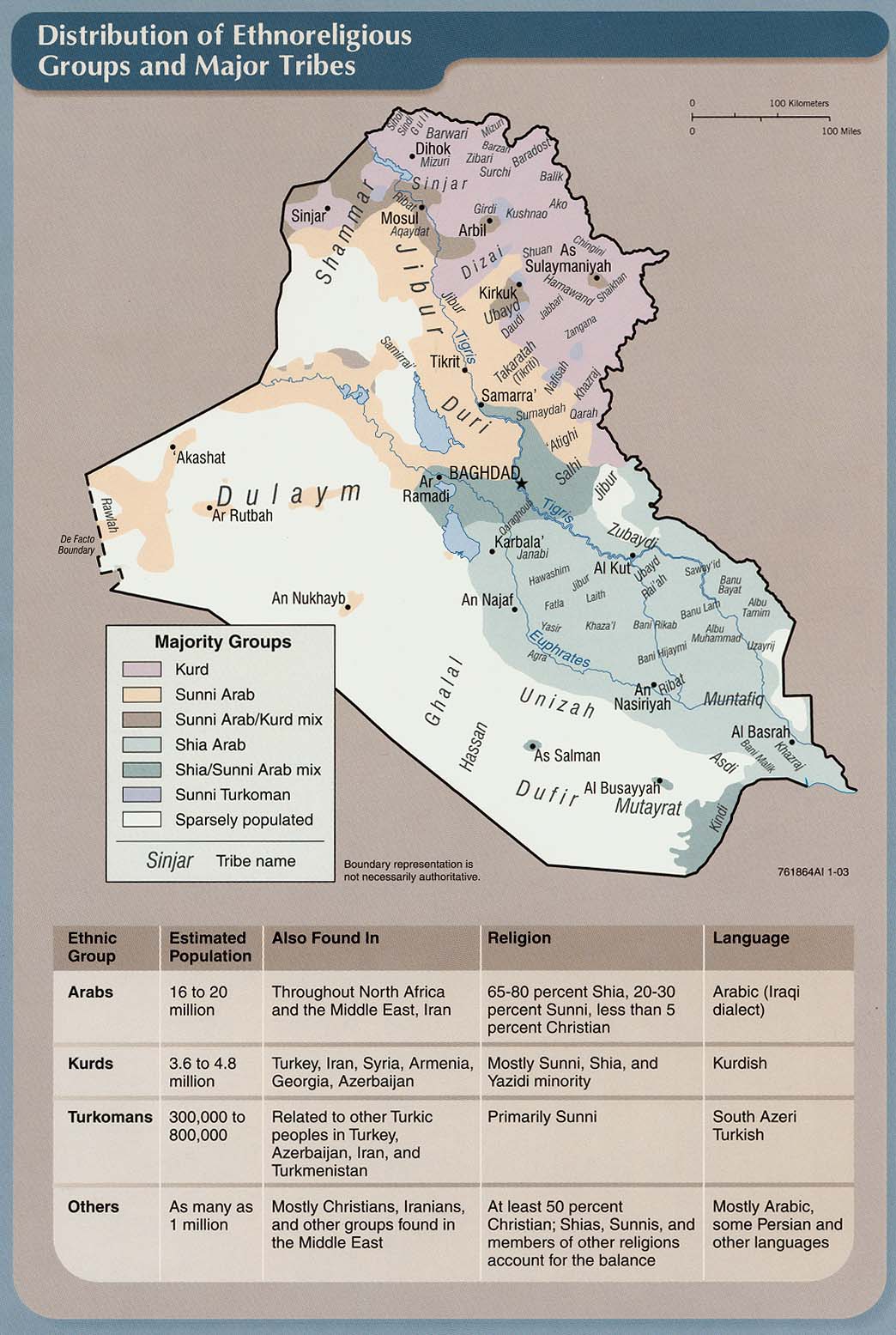
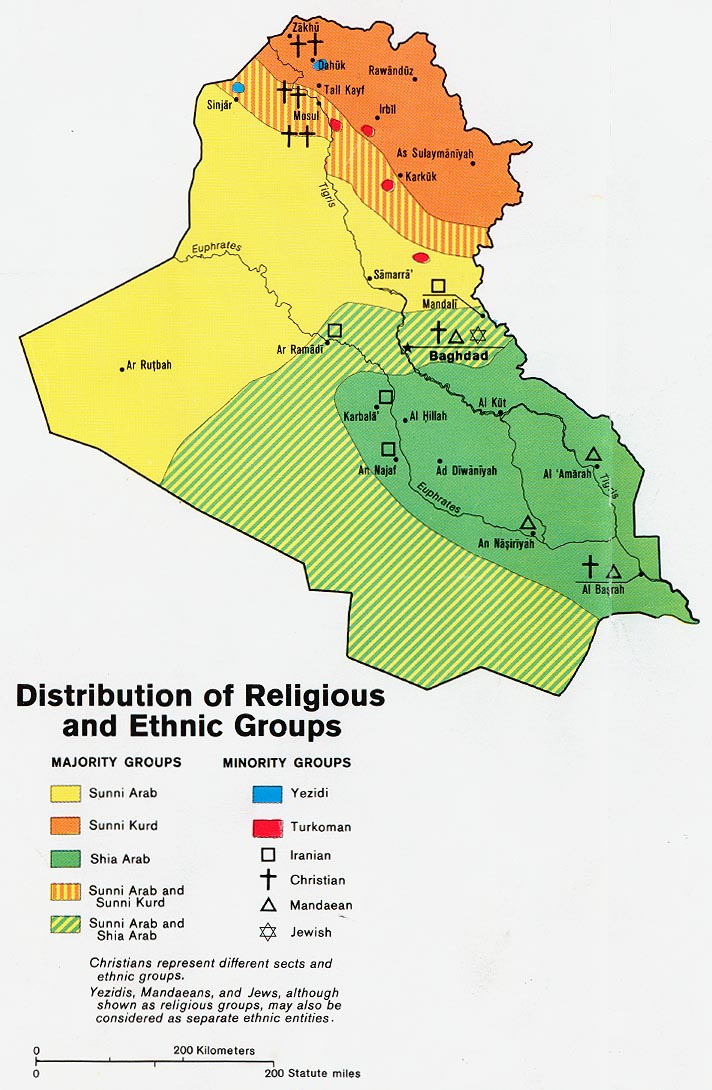
I have always been a fan of maps, but I must admit I haven't spent as much time looking at them lately as I did when I was a kid. It recently occurred to me that I have a certain obligation, as an intelligent human and taxpaying American, to understand the geography of these countries we are occupying, because I'm not sure the folks in charge fully understand it. I'm happy to share a bit of what I have learned, although "what I have learned" mostly amounts to a broadened understanding of my own ignorance. Iraq's geography includes tribes and ethnoreligious groups we rarely hear about on the news. Two maps particularly intrigued me:
--Iraq: Distribution of Ethnoreligious Groups and Major Tribes From Iraq: Country Profile [map], CIA, January 2003 (215K) and pdf format (216K)
--Iraq: Distribution of Religious Groups and Ethnic Groups from Map No. 503930 1978 (163K)
I had never heard of the Yazidi before this week, although they may have been the subject of an earlier post. I also had no idea the Mandaeans were still around. On the ethnic side of things, you have the Kurds, the Iranians, the Turkomen (not to be confused with Turks), the Assyrians, and so forth. That's at least three different religions (four if you count Sunni and Shia separately, along with Yezidi and Madaeanism, not to mention random Jewish and Christian populations) and five languages (Arabic, Kurdish, Aramaic, Persian, and Turkic).

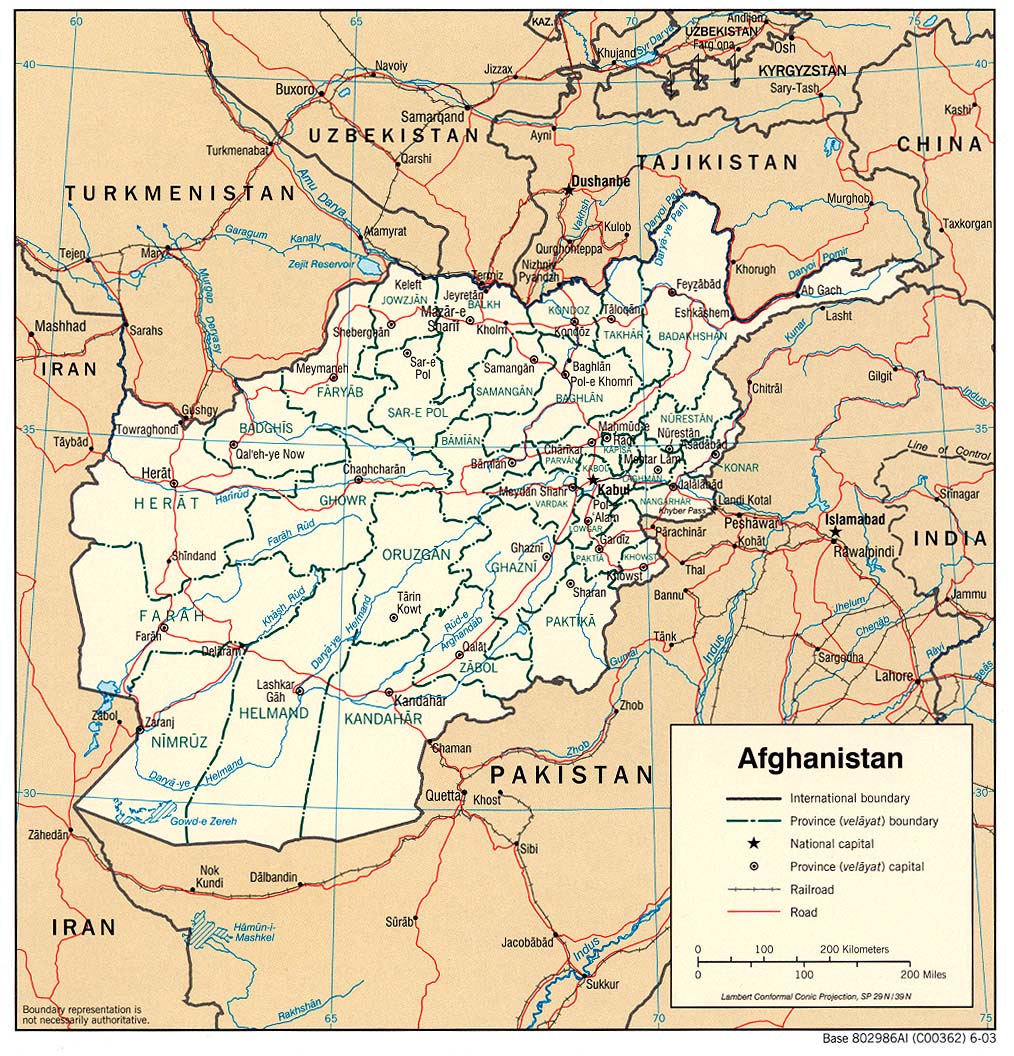
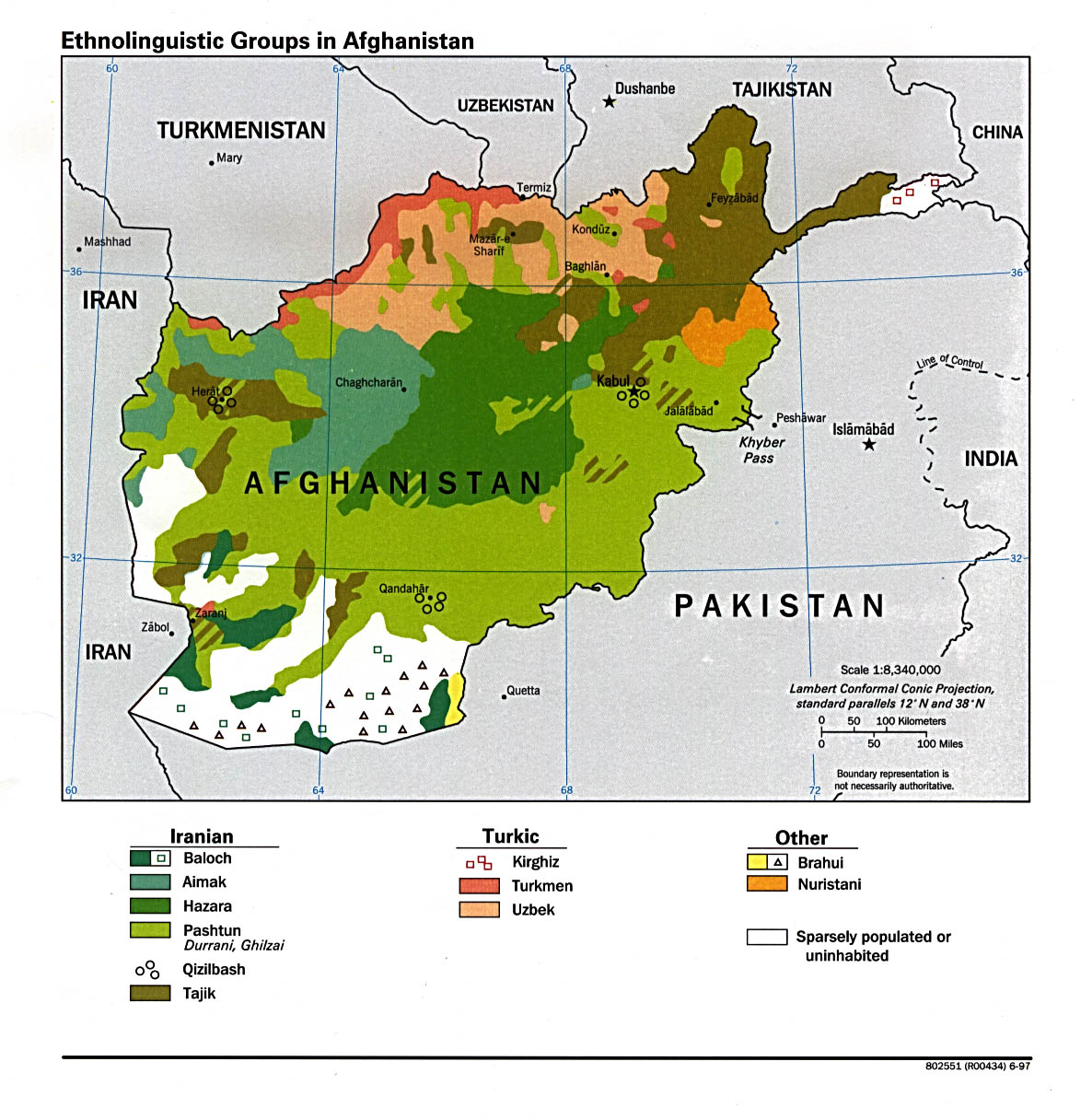
Afghanistan is even more fun (so to speak). I'm not even going to try to count all the provinces. The 11 ethnolinguistic groups listed on at least one map are also quite diverse: some Iranian language family, some Turkic, a little bit of "Other" thrown in.

Given how determined some people are to have a single official language here in the U.S., I kind of wonder if we can ever really understand the hodgepodge that is these two countries.

Man, that's kind of depressing. I hope you were at least enlightened a little.

Friday, August 10, 2007

Hey, if America can do it...

Zimbabwe. Not the number one place you think of for political freedom. Now their new warrantless wiretapping law has as its justification...wait for it...the U.S. warrantless wiretapping law!!!

How proud we should be.

Fuck.

Monday, July 16, 2007

Meanwhile, in other parts of the Middle East

Juan Cole has a great post today on the Kurds in Iraq, Iran, Turkey and elsewhere, and how this whole U.S.-occupation-of-Iraq thing could lead to bigger problems.
[T]here is at the least an issue in the Kurdish terrorist groups that are operating from US-occupied Iraq against Iraq's neighbors. The US is not able to stop the PKK from operating against an ally, Turkey, so I don't think it could stop the Iranian Kurdish terrorists, PEJAK, from operating against Iran. But it is also probably true that there are elements in the US military, in the intelligence services, and in the Washington power elite that are connected to PEJAK and are either happy about its activities or subtly enabling them.
It's a lot of speculation, hearsay, and other inconclusive whatnot, but it is worth being reminded that there is a whole nation in the region that spans several countries and may piss off a lot of said countries while getting pretty pissed itself. Kurdistan was supposed to become a separate state after World War I, but it didn't happen. Now Kurdistan exists in Iraq, Iran, Turkey, Syria, and slivers of Armenia and Azerbaijan, among the largest distinct ethnic groups without their own state. The Iraqi Kurds have done alright since 1991, but things can get complicated really fast for all of Kurdistan if we're not paying attention. And we're not.

Webb for President?

Just a thought. I haven't actually seen the footage from Meet the Press yet, but The Anonymous Liberal has some great commentary on Senator James Webb's handling of Lindsay Graham and on how to address the BS about Iraq:
It is not at all surprising that Iranians are assisting Shia militants in Iraq. The Saudis are doing the same thing for Sunni militants. If there's a proxy war in Iraq, it's not between the U.S. and Iran, it's between Iran and Sunni Arab countries like Saudi Arabia. And we're caught in the middle. The primary fault line in Iraq is between the Sunnis and the Shia. Naturally, the countries that border Iraq, like Shia-dominated Iran and Sunni-dominated Saudi Arabia, have an interest in who eventually controls Iraq. This was an utterly predictable consequence of invading Iraq.
We are not at war with anyone in Iraq, really. The war was against the Iraqi armed forces and the Republican Guard, and that war ended in 2003. What we have had since then is an occupation, something very, very different from a war. There are no clear fronts and no distinct enemy armies to defeat. There are homegrown militias, insurgent groups, and a handful of foreign fighters with all sorts of agendas. To speak of "winning" and "victory" is quite simply childish. Occupations either end or they don't. Finally there is a Democrat with the cojones to stand up and speak some sense. Keep it coming, please.

Tuesday, July 10, 2007

10 Minutes

This is a short from Bosnian director Ahmed Imamovic. Gives you an idea of how shitty the world can be. Just a little something to bum you out if you were having a good day.


From the YouTube description:
10 minutes by Ahmed Imamovic. 1994. Sarajevo, Bosnia and Rome, Italy. How many different things can happen for only 10 Minutes. The film won the award for the best European short film in 2002.

This short film, as its title indicates lasts only 10 minutes, but it tells a much longer story which unravels only in our imagination upon seeing the end of the film. While 10 minutes in someone's life mean nothing, they can be fatal in another: a boy and his loving family, tragedy in a war-torn city, death and destruction. All in just ten minutes. The film follows two simultaneous story lines: one set in Rome, and one in Sarajevo, in 1994, the worst time of the war in Bosnia. Although the Rome part was not filmed on the original location, that does not take away anything from the quality of the film, it was just a symbolic element anyway. Cast is great, story is very compact and well written, direction dynamic and precise. There is nothing out of place in the film: well structured, stripped of false pathos, realistic, it is very straight forward. In other words, this is a jewel of a film, and it was not by chance that it won the award for the best European short film in 2002. 10 minutes for me is definitely one of the most moving and powerful films about wartime Sarajevo. Behind the scene: I read that the director Ahmed Imamovic, in search of Japanese for the role of the tourist, had to go to the Japanese Embassy in Sarajevo and ask one of the staff to perform in the film. Luckily for the director, the Embassy allowed one of their employees to star in the film.